Saturday, February 28, 2009

2009 Pinot Paradise

0 comments
Just a heads up that the 2009 SCMWA Pinot Paradise event is coming up at the end of March. This is a great chance to try a huge range of wines from all over the mountains; pretty much every Pinot producer in the area attends the event.

The main tasting event is in downtown Campbell on Sunday March 29th at Villa Ragusa, and I highly recommend it. There are around 30 wineries participating and the venue tends to be a lot less crowded than events like ZAP or Pinot Days, which means there's enough time to visit most if not all of the tables. Tickets are $55 in advance, $65 on the door.

On Saturday 28th there's the "Pathway to Pinot Paradise". You can visit 22 wineries, some of which don't normally open except on passport days. Some may be pouring older vintages or barrel samples; it may be worth calling ahead to see what's going to be on offer. At $25 the price isn't bad, but the distances involved make it hard to reach more than 4 or 5 wineries. Your best bet is to concentrate on a particular area; decide your itinerary in advance and print off maps or have a GPS. If you haven't visited a winery before it's worth checking with them in case they have any driving tips; some roads in the mountains look more like World Rally special stages.

Thursday, February 26, 2009

Blind Tasting

0 comments
A couple of months ago I was invited to a blind tasting of mostly Santa Cruz Mountains Cabernets and Cab blends that was being run by a market research company on behalf of a local winery. I had a suspicion who the client might be, but no idea what wines were being poured or the order.

The event was held in a lovely, historic house high in the Santa Cruz Mountains. The land was part of the original parcel bought by John and George Jarvis. There were six tasters in all from various backgrounds; some with winemaking connections (both professionally and amateur), others just enthusiasts.

The first six wines were all Cabernets. We were asked to evaluate them silently and score them out of 20, then discuss them as a group. (I don't normally assign scores to wines; I'd rather just try to rank them in order of preference.) The second flight covered blends; there were four Bordeaux/Meritage blends and two "Super Tuscan" Cabernet/Sangiovese blends. In the end it was remarkably difficult to decide between some of them, but a lot of fun.

It was subsequently confirmed that the tasting had been organised for La Honda Winery, to try out a few of their forthcoming releases. I think they should be very pleased by the results.

In the first flight, two of the six Cabernets were from La Honda and both were voted in the top three. All but one of the wines in the flight were from the Santa Cruz Mountains.

The 2006 La Honda Chalk Hill Cabernet from Sonoma came top. It was significantly darker than most of the others. The nose showed bright fruit; blackberry and blackcurrant, with hints of mint, menthol and eucalyptus. I got more of the same on the palate, with liquorice on the finish. A very nice wine.

In second place was the 2004 Martin Ranch Therese Vineyards Estate Cabernet. I've tried this a couple of times and have been impressed. It had a floral nose, with some orange peel and perhaps a hint of aldehyde. Plenty of tannin and spice - nutmeg and cinnamon - but not showing much fruit at this stage. Needs time.

The 2006 Lone Hawk Vineyard Cabernet came in third. This had a faint nose of cedar and raisins. On the palate there were dusty tannins and nice acidity. It too seemed tight; not showing much fruit, and had a medium length finish.

The second flight had four Meritage/Bordeaux blends (including a surprisingly weak showing by a local wine that I've tried before and have in my cellar. I'll reserve further comment on that until I've had chance to try it again).

Voting on this flight was very mixed; a wine that one person rated the highest would be rated the lowest by the next person. The overall winner turned out to be a 2004 Byington Alliage. I used to drink Alliage quite often when it was $15-$20 and made from Sonoma fruit; these days it carries the Paso Robles appellation and costs closer to $30. It had an oaky, floral nose with a little heat from the alcohol. The palate showed sweet cherry and plum fruit with vanilla and decent finish.

The final two wines compared an Italian Cabernet/Sangiovese blend with one from La Honda's own vineyard. It was an unusual comparison; the Italian was all smoke, earth, underbrush and stone with tannin and acidity; a complete contrast to every other wine of the night; perhaps for that reason only I gave it the edge, even though I'm not normally a fan of Italian wines. The La Honda on the other hand had bright redcurrant, blackcurrant and raspberry fruit, some oak and again plenty of acidity. This is a very young vineyard and it'll certainly be interesting to see how it goes on as the vines gain maturity.

Wednesday, January 28, 2009

No Quarter?

1 comments
Note: The tax discussed in this article was eventually dropped from the final budget.

Financially, California is in a mess. Despite a GDP estimated at around $1.7 trillion there's a huge budget deficit. Governor Schwarzenegger has proposed a budget to address this, but as usual tax hikes aren't popular.

One that's proving particularly unpopular in certain areas is a proposed "nickel a drink" tax that would add around 25 cents to the price of a bottle of wine. It's being hotly contested; a group of major drinks producers including Anheuser-Busch, Diageo and MillerCoors have set up a web site against it, www.sinkthedrinktax.com

The big question for winemakers is how to react. Should they put up their prices? If they do, that 25c will almost certainly end up being $1 by the time the wine hits the retail outlets. Rather than marking up a wine from $19.99 to $20.24 you can bet it'll go to $20.99, with the extra 75c going to the three tier chain. But if they hold prices then a 1,000 case winery ends up with an additional $3,000 tax bill.

So here's a few suggestions that you might want to try.

1) Ditch those oversized bottles. I've run a one-man campaign against those oversized, heavy Burgundy/Rhone bottles that don't fit in a standard Bordeaux-sized rack. When I buy wine I'm paying for what's in the bottle, not the bottle itself. I was overjoyed the other day when Thérèse Martin of Martin Ranch winery told me that she was switching to smaller bottles for her excellent Santa Clara Valley Syrah. If you really think that you need a hefty bottle to convince people to buy your wine, well you've got bigger problems than a 25c tax hike.

2) Lose the foil. Foil caps are nice, but they aren't necessary. They serve no useful purpose; in fact they can be downright annoying. You can't see how well the cork is holding up, they hide leakage and other problems. Stefania winery decided to go foil free from the very start, and it doesn't seem to be hurting sales for them.

3) Switch to Stelvin, particularly for white wines. Top quality corks are expensive; bad quality corks are a liability. How much do you lose by replacing corked bottles?

4) Simplify your labels. You don't need one on the front and another on the back. Unless you're trying to distinguish yourself on a shelf and attract an impulse buyer then you don't need metallic embossing, bottle numbering, clever die cut shapes or any of that. Here's a clue: we can't afford to impulse buy any more. We are looking at the price tags, not the pretty pictures. On a wine list, all wines look the same.

And here's one suggestion for our cigar aficionado Governor Schwarzenegger: Increase tobacco taxes. Significantly. 87c a pack is peanuts - make it $2 at least. You'll be raising money and saving lives.

Tuesday, January 27, 2009

Quinta Cruz

0 comments
Denis Hoey and Jeff Emery When I started this blog, and the accompanying website documenting the local wineriers and vineyards, it was partly in response to the changes in the industry. Many of the area's top vintners have retired or are retiring, with a new generation taking over. Nowhere is this transition more evident than at Santa Cruz Mountain Vineyards.

Under its founder Ken Burnap, SCMV established a reputation for long-lived Pinot Noirs and Cabernets. In their youth they could be harsh, tannic and acidic, but with 10, 20 or even 30+ years in the cellar they would evolve into something special.

Since taking over, new owner Jeff Emery has made two significant changes. The first is a slight stylistic change; the latest vintages are made to be approachable earlier, although still with sufficient structure to merit further ageing. A good example of this is the 2005 McDowell Valley Vineyard Durif, from Mendocino County. Durif, also known as Petite Sirah, is notorious for producing tough, tannic wines that can take years to mature. However this wine has a great nose of Ribena (a blackcurrant cordial) and a fruity flavour with remarkably soft tannins.

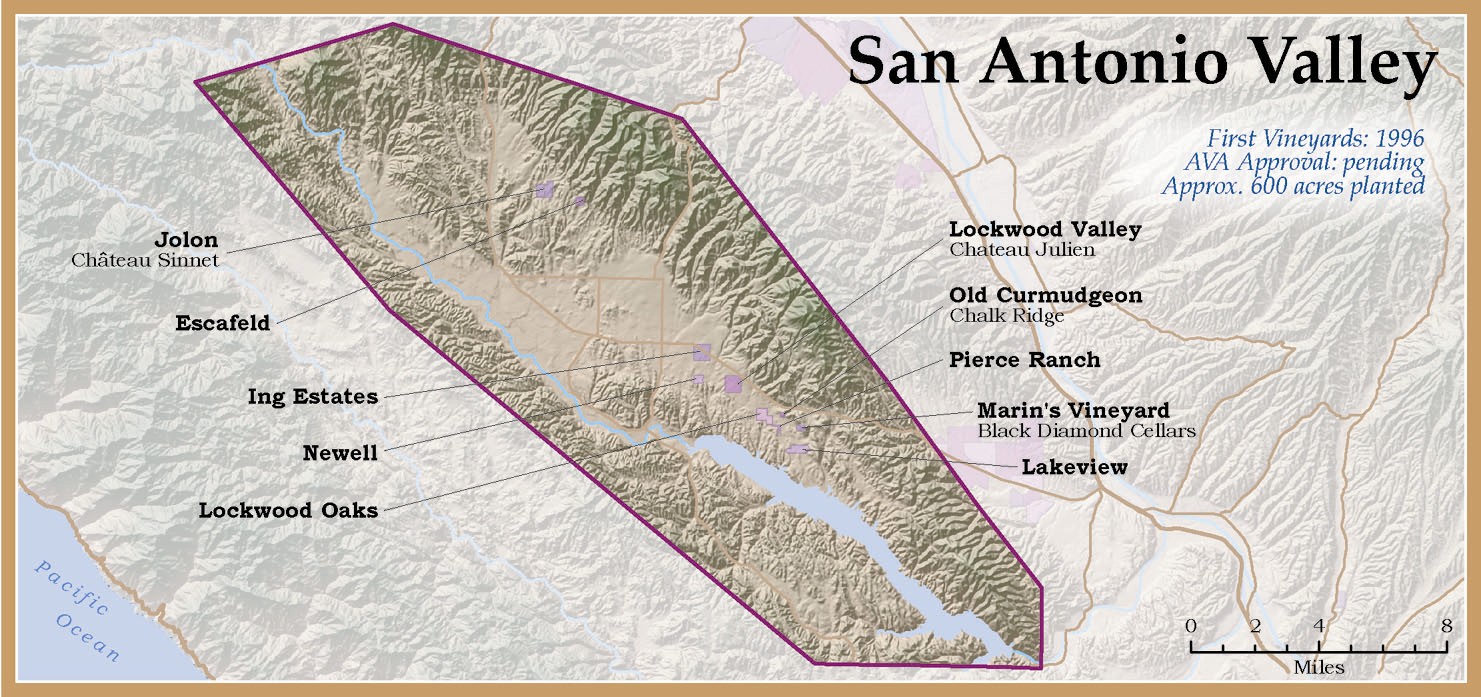
The second, and more obvious change is the launch of the winery's sister label. Named Quinta Cruz (Quinta being a Portuguese term applied to a farm, estate or vineyard) it focuses on Iberian varietals, primarily being sourced from the Pierce Ranch vineyard in the San Antonio Valley AVA.

The first wine from the range to be launched is a 2005 Tempranillo (aka Tinta Roriz). It will be followed by a Graciano from Lodi as well as blends entitled Concertina (Touriga Racional, Tinta Roriz and Tinta Cao) and Touriga (Touriga Nacional and Touriga Francesca). As with the Durif, they are all made in a more approachable style but can certainly benefit from ageing. Unusually for SCMW, the range also includes a white wine, a Verdehlo.

The standout in the range, though, is a port-style wine called Rabelo, named after the flat-bottomed boats that traditionally used to carry barrels on the Douro river. The wine is unusual - possibly unique - in that it's a true single vineyard, single vintage port. A portion of the Tinta Roriz grapes are harvested at 17-18 brix, quickly fermented and then distilled by local producer Osocalis to produce the aguardente (in this case, alambic brandy). The remainder of the grapes are harvested when ripe (not over-ripe, as so often happens elsewhere) and fermented, with the fermentation being stopped by the addition of the spirit. The resulting wine is aged for three years in oak prior to bottling. The result is a sweet, light coloured LBV style port that's simply delicious.

In other news, SCMV assistant winemaker Denis Hoey's fledgling Dragonfly Cellars label is going to be relaunched; it appears that a winery in Napa already holds a trademark on the name. The new brand has yet to be confirmed, but will take effect with the 2007 vintage. In the meantime the 2006 vintage, a Malbec and a Durif, are currently in the marketplace.

Donn Reiser, President of Ridge, found dead

1 comments
Palo Alto Online News is reporting that Ridge president Donn Reisen was found dead from an apparent self-inflicted gunshot wound on Monday. A tribute from Ridge winemaker Paul Draper said Donn's gift of humor, and his ability to forge long lasting relationships, touched everyone he came into contact with. Hundreds of people across the world, inside and outside the wine world loved him. We will miss him. He left the world a better place for having lived.

A memorial service will be held at a future date.

Update: A more detailed report from SF Chronicle

Sunday, January 25, 2009

2006 Stefania Uvas Creek Cabernet Sauvignon

1 comments
We had guests over to dinner last night. I was making Tournedos Rossini and wanted a nice cab to go with it, then remembered I hadn't tried one of these yet. It had half an hour in a decanter by way of an aerating funnel.

It has a floral nose of violets and a little smoke, as if there was some Petite Verdot in there (but there isn't). On the palate it's rich and meaty with flavours of brambles. The tannins are smooth, leaving a good finish. The label notes say it'll keep for up to 10 years; not around here it won't.

The wine won a Silver medal at the 2009 SF Wine Competition, which vastly under-rates it in my view.

Friday, January 23, 2009

Varner tasting at K&L Wines

0 comments
Bob Varner was hosting at K&L wines this evening, pouring a selection of their current releases. The annual release isn't until spring, so it was basically the same lineup that he poured at a similar tasting last April. It was interesting to see how the wines showed and how my views on them had changed almost a year after release.

The Spring Ridge vineyard in Portola Valley is planted to Chardonnay and Pinot Noir. Roughly half the Chardonnay is on its own rootstock; the other half, the "Bee Block" is grafted. The Varners take a "non-interventionist" approach to both growing and winemaking; the vines are dry farmed once they are established, the Chardonnay is harvested, crushed and pressed and allowed to ferment without the addition of yeasts; the Pinot is destemmed and also uses only endemic yeasts.

2007 Foxglove Chardonnay, San Luis Obispo County
An unoaked Chardonnay, that's a blend of Edna Valley and Paso Robles fruit. On the nose there's grapefruit and vanilla. On the palate it's smoothed out somewhat and is showing less bright fruit than I recall.

2006 Varner Bee Block Chardonnay
On the nose there's apple, gooseberry and honeysuckle. The palate shows butter, caramel, apple and pineapple, with vanilla oak on the longish finish.

2006 Varner Ampitheater Block Chardonnay
A nice aroma of pineapple and vanilla. More austere than the Bee block; less butter, more acidity and a nice finish of lemon peel and wet stone.

2006 Varner Home Block Chardonnay
Showing less vanilla on the nose than the others; more floral. Lots of fruit, particularly melon and lemon. A long, slightly bitter finish showing oak and again wet stone.

2005 Neely "Holly's Cuvee" Pinot Noir
Definitely the best showing for this wine so far. The nose is bright and smoky, the palate is richer and smoother than past tastings. It's now showing more cherry and less cranberry; the finish is tannic. Leave this alone and it may well come up trumps.

2007 Foxglove Zinfandel, Paso Robles
This wine was made from a vineyard that the Varners were considering sourcing fruit from. The wine was cellared and bottled by them. There's a nice nose of raspberries and cloves; good fruit on the palate but a slightly bitter finish. At 14.6% it's nicely balanced and at $14 it's well priced.

2004 Woodside Estate Zinfandel

0 comments

I've often said that there's not enough Zinfandel grown in the Santa Cruz Mountains. Conventional wisdom has it that Zinfandel is best suited to warmer areas such as Paso Robles, Lodi and Amador, and while I don't deny there are some good wines being made out of those areas I generally prefer the wines from Dry Creek and (obviously) the Santa Cruz Mountains. They have the rich flavours while keeping the alcohol down to around the 15% mark, still have enough acidity and while fruity aren't stuck with noticeable residual sugar.

A good example is the 2004 Woodside Estate Zinfandel. A great nose of smoked bacon and raspberries and some alcohol (it's 15.2%) leads in to a fruity wine with raspberry and clove flavours but no port-like characteristics, no overripe flavours. On the finish there's liquorice and adequate tannin and acidity.

The current release is 2005, with orders being taken for the 2006 vintage. I personally favour drinking Zinfandel within 5-6 years of the vintage; not that Zinfandel can't age, but it's all about that fresh fruit flavour.

Thursday, January 22, 2009

2009 San Francisco Chronicle Wine Competition

0 comments
I finally got around to checking up on the results from the SF Chronicle Wine Competition. Now I've never had a particularly high opinion of such competitions ever since I realised that Gold, Silver and Bronze did not equate to first, second and third position; instead they are equivalent to point ranges. But it's always interesting to see what reviewers are saying about wines that you like, and this is supposedly the largest competition of American wines in the world.

As a follow-up to the competition there's a tasting event in San Francisco on Saturday February 28 at Fort Mason.

Ventana Vineyards from the Arroyo Seco AVA in Monterey County won best overall white wine for their 2007 Riesling.

La Honda Winery got Best In Class for their 2006 Cabernet Sauvignon, "Naylor's Dry Hole Vineyard", Chalone AVA, which I called a nice, soft, drink-me-now cab with good blackcurrant flavour

Solis Winery was judged Best In Class for their 2007 Fiano, which I recently tasted and called the best non-Chardonnay white wine I've tried in a while.

Sarah's Vineyard achieved two Best In Class awards. The first was for their excellent 2007 Santa Cruz Mountains Pinot Noir. I was impressed by a barrel sample at Pinot Paradise last year and tasted the finished product recently. It's very good, but give it a couple of years to really shine. They also scored Best In Class for their 2005 Besson Vineyard Syrah. Frankly I'm a little surprised by that as I found it a bit overripe for my taste.

Storrs picked up Best In Class for their 2005 Petite Sirah. Sadly they weren't pouring this when I last visited.

To be frank, working out who won what is not easy. There is a table of medals awarded by winery here, but it's full of errors and missing entries. Here are the ones that I have identified so far; apologies for any that I missed. All wines carry the Santa Cruz Mountains AVA unless noted.

Alfaro Family Vineyards
Gold: 2006 "Billy K" Merlot
Bronze: 2007 "A" Pinot Noir
Bronze: 2006 "A" Syrah
Bargetto
Gold: 2006 Reserve Merlot
Beauregard
Gold: 2006 Trout Gulch Vineyard Pinot Noir
Bronze: 2006 Trout Gulch Vineyard Chardonnay
Big Dog
Silver: 2005 Estate Cabernet Sauvignon (San Francisco Bay)
Silver: 2005 Cabernet Sauvignon Port (San Francisco Bay)
Bonny Doon
Gold: 2006 Ca del Solo Dolcetto (Monterey)
Bronze: 2006 Le Cigare Blanc (Central Coast)
Bronze: 2007 Le Vol des Anges (Arroyo Grande Valley)
Burrell School Vineyards
Bronze: 2005 Estate Merlot
Cinnabar
Gold: 2007 Pinot Noir (Santa Lucia Highlands)
Silver: 2006 Mercury Rising (California)
Bronze: 2006 Trebbiano (Paso Robles)
Clos LaChance
Gold: 2007 "Glittering-Throated Emerald" Chardonnay (Monterey)
Gold: 2005 Estate Cabernet Sauvignon (Central Coast)
Silver: 2006 "Black Chinned" Syrah (Central Coast)
Bronze: 2006 "Buff-Bellied" Zinfandel (Central Coast)
Creekview Vineyards
Double Gold: 2006 Syrah (Santa Clara)
Gold: 2007 Chardonnay (Arroyo Seco)
Cumbre of Vine Hill
Gold: 2006 Hicks Family Vineyard Pinot Noir
Fernwood Cellars
Bronze: 2007 Vanumanutagi Chardonnay
Bronze: 2006 Small Vineyard Merlot
Bronze: 2006 Machado Creek Petite Sirah (Central Coast)
Fortino
Silver: 2006 Petit Sirah (Central Coast)
Bronze: 2005 Sangiovese (Central Coast)
Bronze: 2005 Carignane (Santa Clara)
Gatos Locos of Vine Hill
Bronze: 2007 Chardonnay (Mokelumne River),
Bronze: 2006 Syrah
Hallcrest
2005 Belle Farms Pinot Noir
Hunter Hill
Silver: 2006 Estate Syrah
Bronze: 2007 Syrah/Grenache/Mourvedre (California)
JD Hurley
Silver: 2005 Merlot
Silver: 2006 Zinfandel
Bronze: 2004 Cabernet Sauvignon (Santa Clara Valley)
Bronze: 2005 Cabernet Sauvignon
J. Lohr
Gold: 2007 "Fog's Reach Vineyard" Pinot Noir (Paso Robles)
Gold: 2006 "Hilltop Vineyard" Cabernet Sauvignon (Paso Robles)
Bronze: 2006 "Arroyo Vista Vineyard" Chardonnay (Arroyo Grande Valley)
Bronze: 2005 "Carlo's Vineyard" Cabernet Sauvignon (Napa Valley)
Jason-Stephens Winery
Silver: 2006 Dorcich Vineyards Syrah (Santa Clara Valley)
Bronze: 2006 Cabernet Sauvignon (Santa Clara Valley)
Bronze: 2006 "Dorcich Estate" Cabernet Sauvignon (Santa Clara Valley)
La Honda Winery
Best In Class: 2006 "Naylor's Dry Hole" Cabernet Sauvignon (Chalone)
Double Gold: 2006 Lonehawk Cabernet Sauvignon
Bronze: 2006 "Windsor Oaks" Cabernet Sauvignon (Chalk Hill)
Loma Prieta Winery
Gold: 2007 Saveria Pinot Noir
Gold: 2005 Cabernet Sauvignon
Mann Cellars
Bronze: 2005 Mannstand Vineyard Malbec (Santa Clara County)
Martella
Silver: 2006 Zinfandel (Fiddletown)
Silver: 2006 "Hammer" Syrah (AVA not stated)
Silver: 2005 "Heart Arrow Ranch" Cabernet Sauvignon (Mendocino)
Bronze: 2007 Viognier
Bronze: 2006 "Oleta Vineyard" Grenache (Fiddletown)
Martin Ray Winery
Gold: 2004 Reserve Cabernet Sauvignon
Monte Verde Vineyards
Silver: 2006 "Muritabo" Syrah (Central Coast)
Bronze: 2006 "Villa Palma" Merlot (Central Coast)
Muccigrosso
Gold: 2005 "Stan's Zin" Moniz Vineyard Zinfandel (Santa Clara)
Silver: 2006 "Lyn Zin" Zinfandel (Santa Clara)
Bronze: 2005 "Table Two" Syrah/Sangiovese (California)
Perrucci Family Vineyard
Silver: 2006 Sangiovese
Silver: 2006 Merlot
Roudon-Smith
Gold: 2007 Pinot Noir
Bronze: 2006 Cabernet Franc (Monterey)
Santa Cruz Mountain Vineyard
Gold: 2005 "Bailey's Branciforte Ridge" Pinot Noir
Gold: 2006 Shepard Vineyard Durif
Silver: 2006 Branciforte Creek Pinot Noir
Silver: 2005 McDowell Valley Vineyard Durif (Mendocino)
Sarahs Vineyard
Best Of Class: 2007 Pinot Noir
Best Of Class: 2005 Besson Vineyard Syrah (Santa Clara Valley)
Gold: 2007 Estate Pinot Noir (Santa Clara Valley)
Silver: 2007 Chardonnay
Silver: 2007 Estate Chardonnay (Santa Clara Valley)
Satori Cellars
Gold: 2006 "Halelujah" Cabernet Sauvignon (Washington)
Bronze: 2006 "Ta Da" Syrah (Santa Clara County)
Bronze: 2006 Estate Petite Sirah (Santa Clara Valley)
Bronze: 2006 Estate "Bluehand" Cabernet Sauvignon (Santa Clara County)
Savannah Chanelle
Silver: 2007 Pinot Noir (Russian River Valley)
Bronze: 2006 "Gunsalus" Pinot Noir (Russian River Valley)
Bronze: 2006 "Armagh" Pinot Noir (Sonoma Coast)
Silver Mountain Vineyards
Silver: 2006 Tondre's Grapefield Pinot Noir (Sta. Rita Hills)
Silver: 2006 Muns Vineyard Pinot Noir
Silver: 2006 Miller Hill Pinot Noir
Silver: 2006 Wiedeman Syrah (Central Coast)
Solis Winery
Best In Class: 2007 Estate Fiano (Santa Clara Valley)
Silver: 2007 Estate Chardonnay (Santa Clara Valley)
Silver: 2005 Reserve Cabernet Sauvignon/Merlot/Cabernet Franc (Santa Clara Valley)
Bronze: 2004 Reserve Cabernet Sauvignon (Santa Clara Valley)
Sones
Gold: 2006 French Camp Petite Sirah (Paso Robles)
Silver: 2007 "La Sirena" (California)
Bronze: 2006 Zinfandel (Santa Clara County)
Sonnet
Silver: 2006 Amber Ridge Pinot Noir (Russian River Valley)
Silver: 2006 Kruse Vineyard Pinot Noir (York Mountain)
Bronze: 2006 Muns Vineyard Pinot Noir
Bronze: 2006 Tondre's Grapefield Pinot Noir (Sta. Rita Hills)
Soquel Vineyards
Gold: 2007 Saveria Vineyard Pinot Noir
Gold: 2007 Bald Mountain Vineyard Pinot Noir
Silver: 2007 Lester Family Pinot Noir
Silver: 2006 Garvey Family Cabernet Sauvignon (Napa Valley)
Stefania
Silver: 2006 Uvas Creek Cabernet Sauvignon (Santa Clara Valley)
Silver: 2006 Cabernet Sauvignon
Storrs
Best In Class: 2005 Petite Sirah
Double Gold: 2006 Wildcat Ridge Pinot Noir
Gold: 2007 Chardonnay
Gold: 2007 Stu Miller Vineyard Chardonnay
Gold: 2006 Pinot Noir
Gold: 2005 Lion Oaks Zinfandel (Santa Clara County)
Silver: 2006 Le Manoir Pinot Noir (Monterey)
Sycamore Creek
Double Gold: 2007 Zinfandel (Santa Clara Valley)
Gold: 2006 Vanumanutagi Chardonnay (Santa Clara Valley)
Bronze: 2005 Uvas Creek Cabernet Sauvignon (Santa Clara Valley)
Therese Vineyards
Gold: 2005 Syrah (Santa Clara Valley)
Gold: 2005 Cabernet Sauvignon
Thomas Fogarty Winery
Silver: 2007 Gewürztraminer (Monterey)
Silver: 2007 Pinot Noir
Silver: 2004 Vallarga Vineyard Cabernet Sauvignon (Napa Valley)
Bronze: 2006 Chardonnay

Tuesday, January 20, 2009

Rabbit's Foot Meadery

0 comments
Hidden in an industrial unit off Tasman Drive, a short distance from the Great America theme park in the heart of Silicon Valley is the Rabbit's Foot Meadery. Now you should know that this is a wine blog and that Mead is not wine. I just wanted to clarify that right at the start, so that there's no confusion. Mead is a drink made from honey; it can be dry or sweet, weak or strong. The name conjures up images of druids and vikings, but its history goes back over 4000 years; it may even be as old a drink as beer or wine. It was made by Ethiopians who call it Tej. It's mentioned in Hindu scriptures. You can add various flavourings to it to produce strange sounding brews such as metheglin, pyment, melomel or cyser. And as I said, nowadays it's being made in an industrial unit in Sunnyvale.

The Rabbit's Foot tasting room is open weekdays from 1PM to 6PM, and occasionally on Saturdays. And yet it's quite possibly the nearest thing to a proper pub that I've found anywhere in the US. For one thing, it's the only tasting room I can recall that had a dartboard. For another it seems to be populated solely by people who know the owner and who can switch the topic of discussion from the weather to politics via almost any topic imaginable.

There's a wide array of drinks available, all with at least some honey in the mix. For a start there are several meads, both traditional and flavoured. Then there are several cysers/ciders and finally there's a range of honey beers.

We began with a Dry Mead, Dry being a relative term; this has around 1% residual sugar, so it's more of an off-dry by wine standards, and 13% alcohol. The mead is matured for 2 years in new American oak barrels and has acquired a sherrylike quality. You can certainly taste the flavour of the honey in it.

This was followed by a Pear Mead. The dry mead is mixed with table pears (as opposed to perry pears, which are much higher in tannin and acidity) as well as a blend of spices. It seemed slightly dryer than the Dry Mead and tasted more of the spices than of pears.

Next came a Sweet Mead. At 3% residual sugar it's significantly dryer than most late harvest wines. On the nose there was a distinct floral/wintergreen characteristic, with a real flavour of honey on the palate.

Lastly there is a Raspberry Mead. This is a dry mead to which whole raspberries are added and left to macerate. It has a real bright raspberry favour without being heavy or artificial. In some ways it resembles a Belgian Lambic fruit beer, though without the sourness.

Rabbit's Foot also make two other true meads known as Melia and Mead Of Poetry, but they weren't available for sampling. The Melia apparently is sweeter still and resembles a dessert wine. The Mead Of Poetry is aged for 7 years in new oak, and is said to have a port like character. A new barrel is due to be bottled soon, so I plan to return to sample it.

After the Meads came a range of Cysers. These are a blend of apple juice and honey. The alcohol content is much lower than the Meads, making them drinks that you can enjoy by the pint. The regular Cyser comes in both still and carbonated forms; the still had good apple flavours with a fair amount of acidity. The closest thing I've tried was a French cider from Normandy.

I then tried sparkling cysers flavoured with cherry and peach. The cherry had really good, bright cherry flavours, again reminiscent of a Belgian Kriek; the peach was a little lacking, like the syrup from a tin of peaches (though not as sweet). But then I'm not a fan of Peach Lambics either. The Cysers are being marketed as Ciders, which of course isn't strictly accurate; Cider should be made solely from apple juice, but it seems that consumers were put off by the unfamiliar term.

Finally we moved on to the beers. Each of the beers gets around 25% of its fermentable sugars from honey. If you didn't know that you probably wouldn't guess; I didn't detect any noticeable honey flavours in any of the beers, which makes me wonder what the point is, other than a gimmick; I doubt that it's a cost saving. As with the Cysers the beers are all brewery conditioned, which means that the CO2 gas is added after they are filtered and stabilised. The brewers are considering making cask conditioned products and I hope they do.

First came Biere de Miele. This is a Kölsch style beer, which means that it resembles a Lager except that it's brewed at a warmer temperature, using a top fermenting ale yeast. Frankly this is a really good beer; honey or no honey it's a good example of what I remember a Kölsch to be - fruity like an ale with a light hop flavour. Very nice indeed.

Next came Honey Red, an Irish red ale. Not my favourite beer style, but a good`example of it nontheless.

Diabhal is a Belgian style ale with 8% alcohol. It's got that unmistakeable Belgian beer character, but there's a bit too much residual sugar which I'm not so keen on.

Finally, Hel is a spiced beer, flavoured with coriander and orange peel. At a whopping 10% alcohol it's stronger than many German table wines. The spices remind me of Anchhor Brewing Co's Christmas Ale, though it's way stronger in flavour as well as alcohol.

Behind the tasting room there's the shining stainless steel of the brewery and meadery. Yellow tape on the floor marks the border (for tax and licencing reasons) btween the two. There are two separate bottling plants, one for the still meads, the other for the sparkling beers and cysers. Off to the side are the barrels of mead and the kegs of new beer.

Most of the products are sold by the bottle, and several are available at BevMo. The draught cysers and beers are also sold by the pint. Tasting is free. Given the number of products offered it's probably wise to take public transport; the 55 bus stops at the corner of Tasman and Birchwood, or the Mountain View to San Jose light rail is just a short walk away.